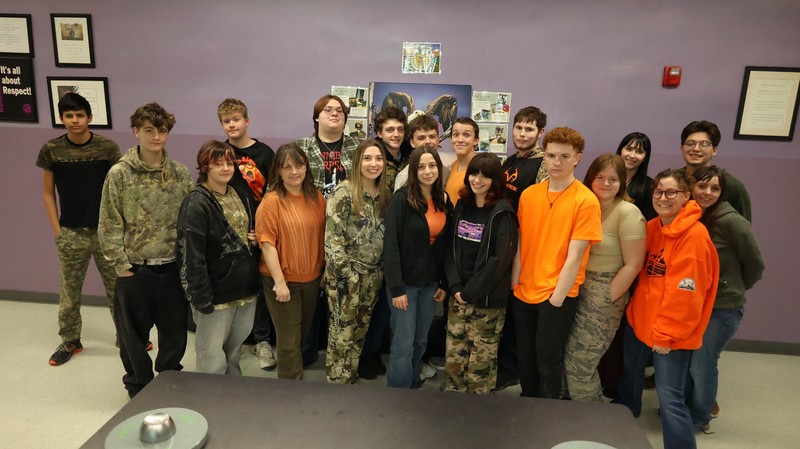
Students at Eagle Ridge New Tech High School celebrated National FFA Week with creativity, competition and a growing sense of pride in their chapter’s accomplishments.
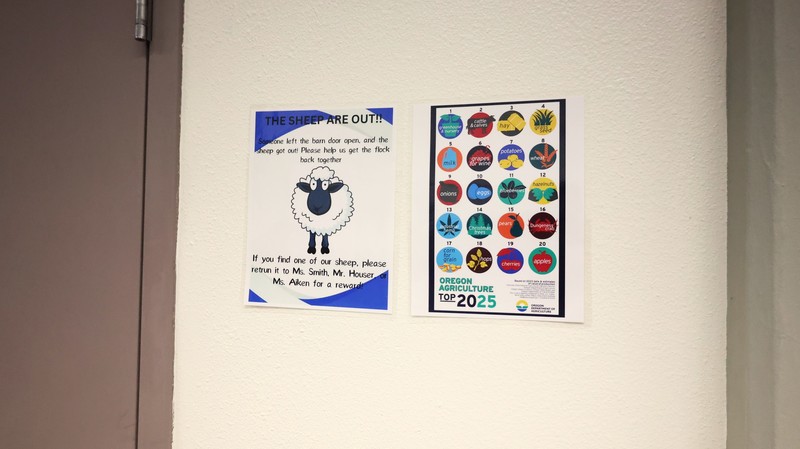
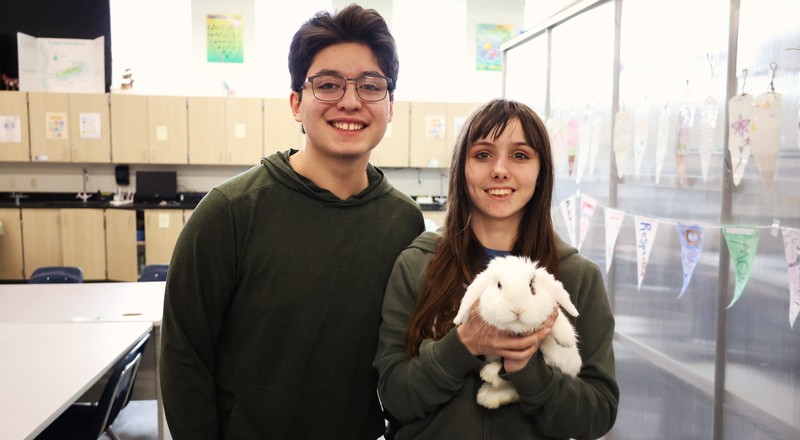
Throughout the week, FFA members organized daily themes, decorated the school with informational posters and even hidden small toy sheep around campus to spark curiosity and engagement. “We have little sheep hidden all around the school that students can find just to kind of keep them involved,” Eagle Ridge FFA president Ela King said. “A lot of people don’t know about FFA, especially since it’s in the city schools. It’s very new to city schools, so we’re trying to get people interested and aware of what we do.”
National FFA Week is recognized by FFA chapters across the country, but for Eagle Ridge’s new program, the celebration carries special meaning. Now in its second year, the chapter has quickly built momentum. Last year marked its first official banquet and a handful of competitions. This year, members are aiming even higher.
“This year, we’re trying to get to almost every competition,” King said.
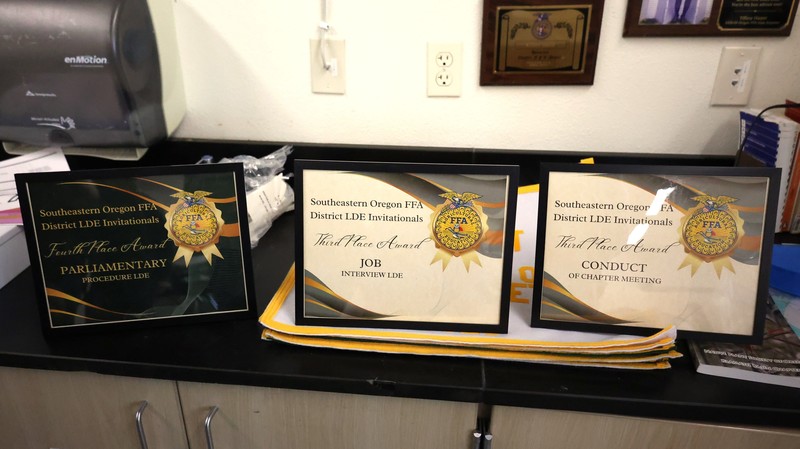
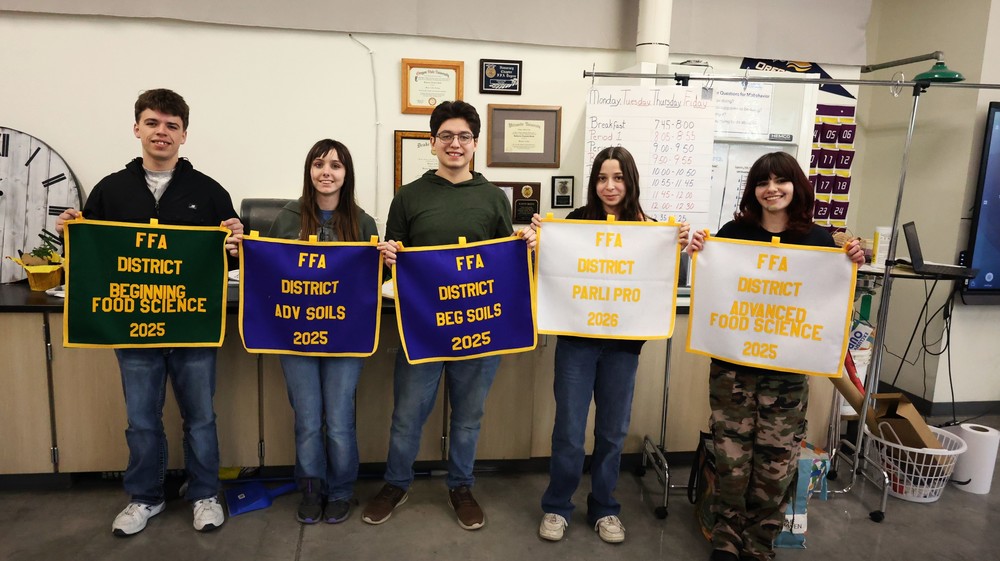
Students have already competed in events such as soils, food science and parliamentary procedure. Most recently, the team placed third in parliamentary procedure, a contest that tests students’ ability to properly run a meeting using formal motions and procedures.
“We had to create a meeting, make motions and follow the proper order,” King said. “We got graded on it, and placed third.”
In soils, Eagle Ridge’s chapter earned top team honors at districts, with members placing individually from first to third.
“Every single one of us placed as individuals, and both our beginner and advanced teams placed first,” King said.
King noted district alignments can vary year to year and emphasized the team is becoming strong competition for larger, more established programs.
Competitions often require travel, with events typically held an hour or two away, and sometimes even farther. The chapter advanced to the state level in food science, where students rotated through tasting, smelling, written tests and food safety identification challenges.
“It’s such a wide range,” King said. “Food science was completely different than soils. In soils, we were out digging trenches and identifying dirt textures. In food science, we were inside analyzing flavors and safety concerns. It teaches real-world skills.”
King herself is preparing for an upcoming agricultural mechanics competition, where she will demonstrate welding, wiring and tractor part identification.
“I’m really trying to get first in ag mechanics. I’m confident I could,” King said.
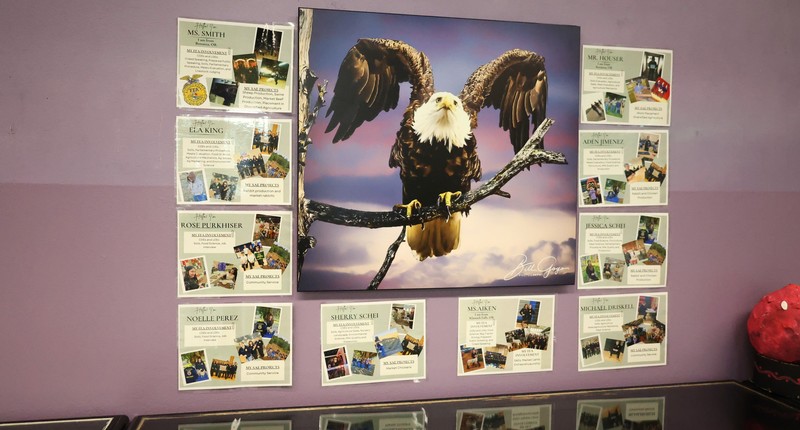
The chapter is supported by dedicated advisors Katharine Smith, Dylan Houser, and Haley Aiken, all former FFA members, who guide students in areas ranging from environmental science to mechanical design.
“I didn’t even know what FFA was at first,” King said. “But it’s shown me that I’m very interested in the environment and welding and agriculture. It’s taught me a lot and shown me things I didn’t know I could do.”