Klamath Falls City Schools is being recognized for a dramatic transformation in student support systems and instructional practices, thanks to a multi-year effort rooted in implementation science and guided by national education consultant Jenice Pizzuto.
Click Here to be directed to the KFCS Facebook To See A Full Photo Gallery
As the founder and CEO of IMPACT Lead Succeed and author of Implement with IMPACT, Pizzuto has worked alongside district leaders and educators since 2021 to help KFCS move beyond traditional professional development and toward a system focused on sustainable improvement and long-term student success.
The work began after an internal audit revealed that despite nearly a decade spent developing Multi-Tiered Systems of Support (MTSS), only 12 percent of the framework was being implemented effectively across the district.
“That was a big wake-up call,” Pizzuto said. “KFCS realized they didn’t have a knowledge problem. They knew what to do. They had an implementation problem.”
Today, the district has reached approximately 80% implementation fidelity in key MTSS systems, making KFCS a statewide leader in the work.
According to KFCS Superintendent Dr. Keith A. Brown, the district’s success has come from investing in people, systems, and a culture centered on continuous improvement.
“This journey has shown us that when you invest in the science of implementation, build strong teams, and align everything behind what matters most, real, lasting change is possible,” Brown said.
At the center of the transformation has been the creation of Inclusive Implementation Teams at the district, building, and department levels. Unlike traditional committees, the teams are designed to serve as the “engine” behind the district’s work, ensuring teachers, staff, administrators, and coaches all play an active role in planning and decision-making.
Pizzuto said one of the district’s biggest strengths has been its commitment to teacher voice and shared ownership.
“Fred Bartels (KFCS Executive Director of School Improvement) specifically, Daymond Monteith, Executive Director of Operations) the whole team thought really hard to make sure they had teachers and staff included in the design of the work,” Pizzuto said. “That has been a huge part of why this has worked.”
The district adopted the framework from Implement with IMPACT during the 2022-23 school year, shifting away from “one-and-done” professional development toward what Pizzuto calls “deliberately developmental implementation.” The approach focuses on continuously building the knowledge, skills, and confidence of educators while monitoring whether systems are actually working in classrooms.
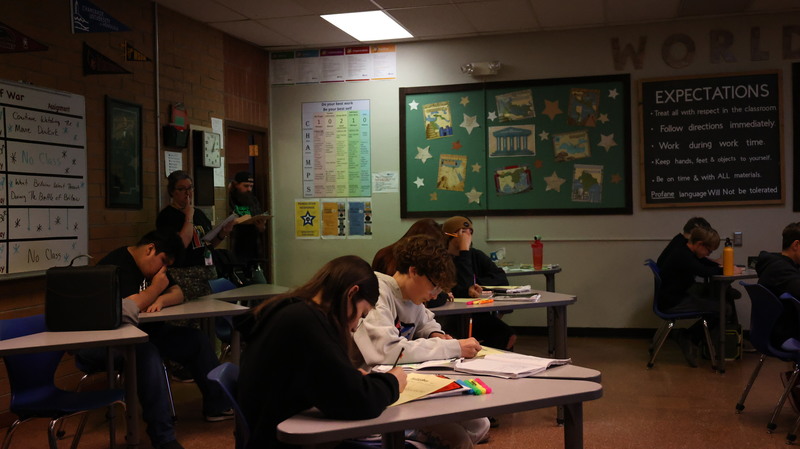
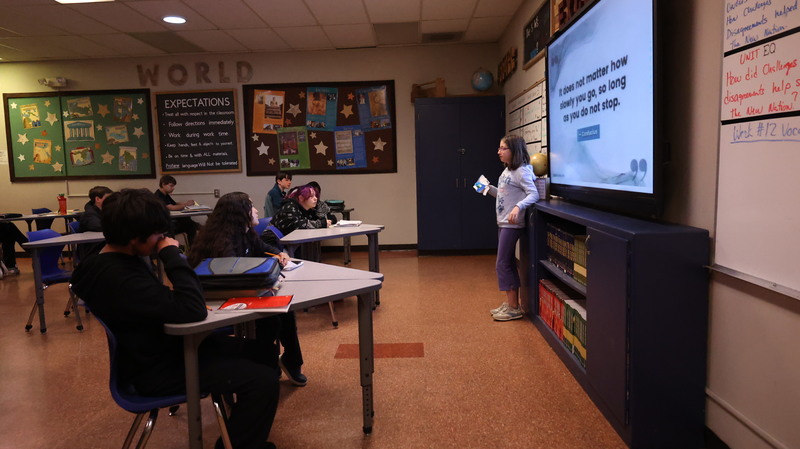
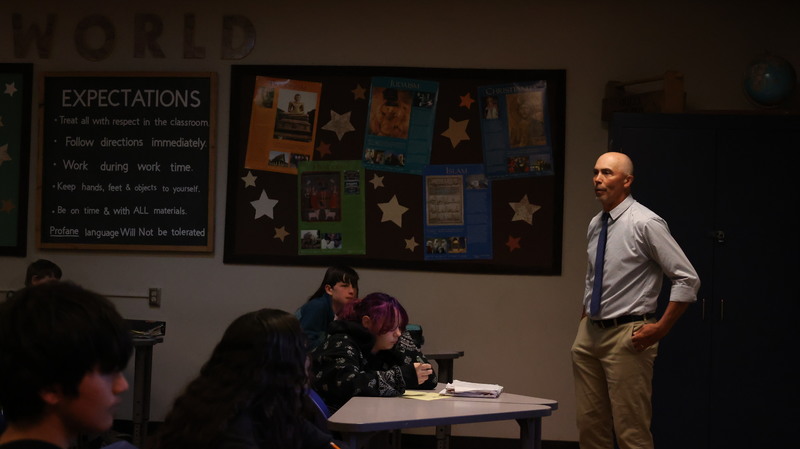
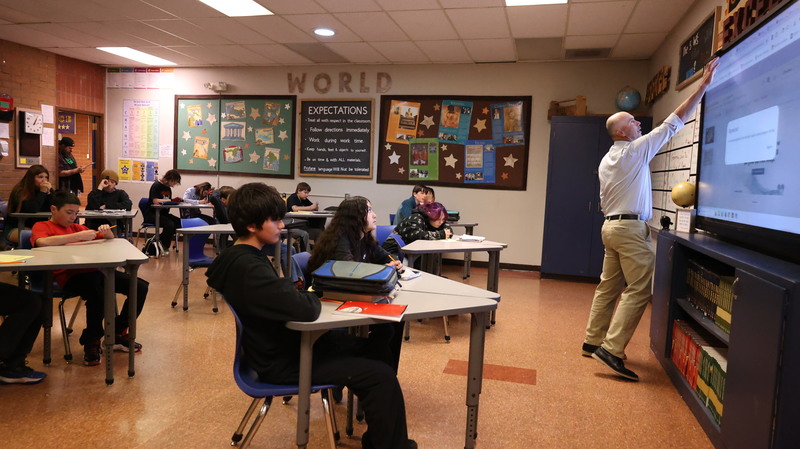
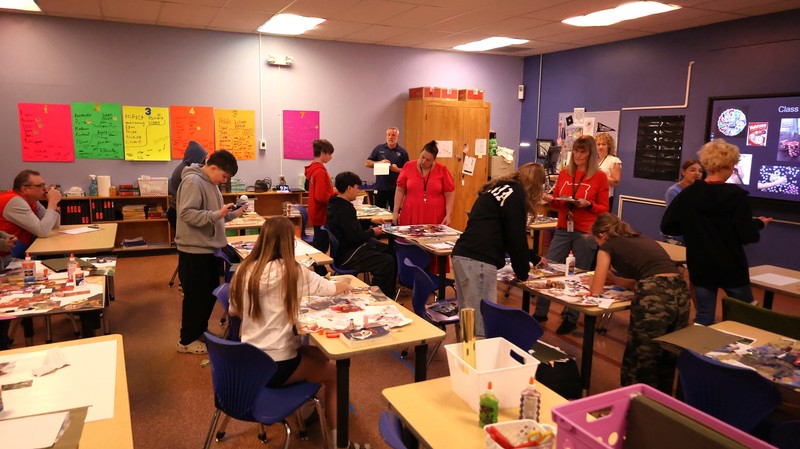
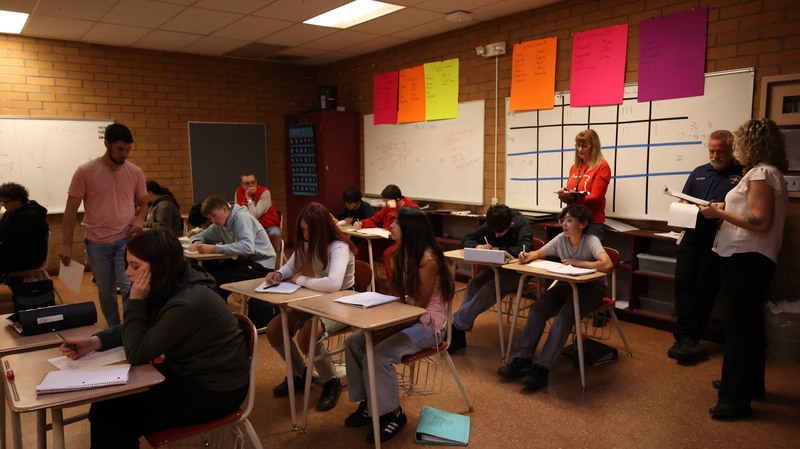
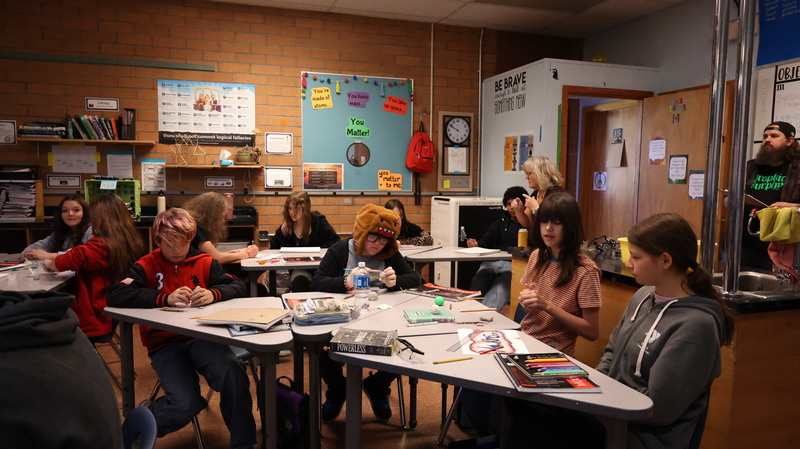
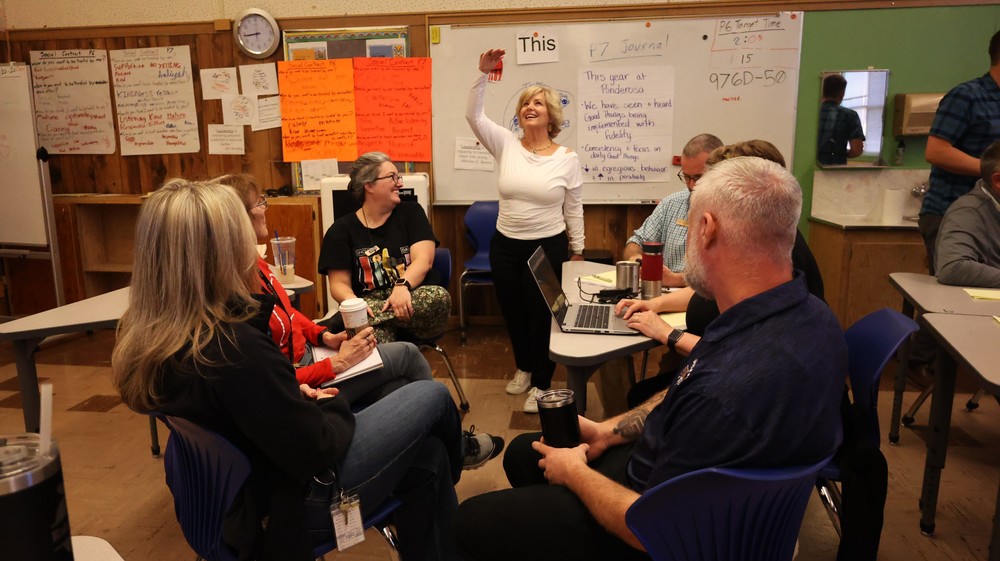
One of the most visible components of the work has been the district’s use of collaborative “Learning Walks,” where educators visit classrooms to observe instructional practices and gather implementation data.
Pizzuto emphasized that the process is non-evaluative and focused entirely on improvement.
“We’re not evaluating teachers,” she said. “We’re simply asking: Are we doing what we said we were going to do? And how can we help people get better at it?”
Over the last two years, KFCS has expanded the process into cross-building Learning Walks, allowing educators from different schools to observe and learn from one another.
“That’s where the culture really started to shift,” Pizzuto said. “It moved from shame and blame to a continuous cycle of improvement.”
District leaders say the results are already visible.
At Klamath Union High School, staff focused heavily on improving ninth-grade success and reducing failing grades. The school reported 40 fewer students earning Fs compared to the previous year, while also expanding grade checks for students in grades 10-12 and strengthening outreach efforts with eighth-grade students transitioning into high school.
At Eagle Ridge New Tech High School and Klamath Learning Center, teams focused on refining processes and building collaboration across programs. Klamath Learning Center was also recognized as a National Showcase School this year.
Meanwhile, staff at Ponderosa Middle School highlighted improvements in positive student behavior, consistency in classroom expectations, and reductions in egregious behavior incidents.
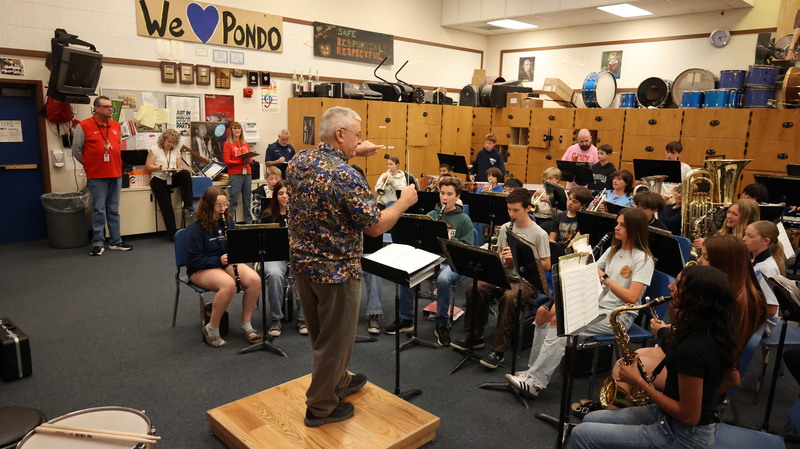
Pizzuto recently returned to Klamath Falls for one of her four visits to the Klamath Basin during the school year, continuing the district’s ongoing implementation work alongside KFCS staff. During the two-day visit, Pizzuto first worked with elementary school teams before spending the following day with secondary staff conducting collaborative Learning Walks in classrooms at Ponderosa.
Pizzuto noted the work has not been easy.
“There was a lot of resistance in the beginning,” she said. “People didn’t want others coming into their classrooms. Some didn’t want to be on the teams. But over time, educators started seeing that this work was about support, not judgment.”
Pizzuto credits KFCS educators for embracing the process and helping create lasting change.
“The teachers have been phenomenal,” Pizzuto said. “They’ve been part of designing the work, training one another, and helping everyone improve. That’s what sustainable implementation looks like.”
KFCS leaders believe the district’s progress is also especially meaningful given the challenges facing the community. The district serves one of the highest-poverty student populations among large Oregon school districts, with more than 27% of students impacted by economic disadvantage.
Even with those challenges, district leaders say the implementation work has helped schools become more aligned, collaborative, and responsive to student needs.
Pizzuto, who works with school systems nationally and internationally, said KFCS is becoming a model for other districts.
“They are really leading in this area,” Pizzuto said. “There are much larger districts doing this work, but Klamath Falls is showing what’s possible when you stay focused, build strong teams, and commit to continuous improvement.”
Pizzuto also pointed to encouraging academic indicators emerging across the district. She noted that Pelican Elementary School recently ranked among the top growth schools in Oregon for English Language Arts improvement, placing sixth out of approximately 1,690 schools statewide in growth measures.
The district plans to continue expanding the work next year, including new implementation efforts at Mills Elementary School and Ponderosa, while also continuing training sessions this summer to help onboard new staff and maintain consistency across the district.
“The beauty of having implementation teams,” Pizzuto said, “is that the work doesn’t leave when one person leaves. The system continues because people collectively own it.”